When planning for a stock count, it’s important to agree on the timing with the needs of the business and accounting. It’s also crucial to agree on items which are to be counted, teams counting and other relevant procedures, i.e. how exactly this counting should be performed. Continue reading
Category Archives: 2.02 Stock Count
General considerations
General considerations that should be made for a stock count revolve around items themselves.
The key questions that need to be answered are as follows: Continue reading
Stock count
Why would you perform a stock count procedure?
There are two reasons you might and should do it. Remember that stock count is not just for the ‘checkmark’, but for actually providing the company’s accounting and management with relevant information – accurate positions in stock and understanding whether there’s anything missing (that is there haven’t been any thefts) or if there’s something that’s actually long standing and if the net realisable value of such items has actually dropped below the currently recognized cost. Continue reading
Dealing with stock count differences
Stock count differences occur, that’s part of the nature of the inventories and the procedure – to identify if any of the positions differ from the physical count.
It’s what you do with the results afterwards that matters. Continue reading
Stock counts more often than just once a year
Owning inventory means that you need to count for it – both to ensure that it’s really there physically and also that what’s physically existing, is also accounted on the inventory ledger and hence also on the balance sheet. Whilst we’ve covered the general gist of stock counts, what we have not covered, are partial stock counts which happen more than just once a year.
A full stock count is something you normally do once a year. Given your business type and systems you may decide it’s best to do them more often, but as it is, it’s mostly done just once a year. However, there’s also an option to do just partial stock counts for specific areas, specific types of goods and so on. Either you do them on top of the full stock counts or you only do the partial ones, depends on the level of planning and detail you put into the partial stock counts. Continue reading
Planning for stock count
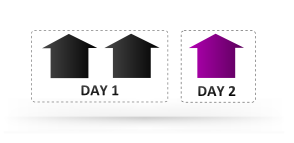 Planning for inventory stock count is very dependable on inventory type and locations. If it’s just one warehouse and only similar type of goods, it’s more or less easy. You can do it in one day and be done with it.
However, in case there are various locations and / or different types of inventory, it’s more complicated. There more you have locations, there more you have to consider your teams in general – i.e. different for each location – and if not different, then on which days are the counts done. Moreover, in case of various types of goods the teams may need to be different because some are more experienced in one type and not the other. It may also be that not everything can be counted on one day. Or it may even be so that it’s not humanly possible to count everything on one day. There are quite a few things to consider and as such you need to plan them ahead.
Continue reading
Counting sheets
When performing the stock count, people doing it need to be able to write down the amounts they have counted. While writing essentially isn’t a problem, a few things need to be kept in mind when dealing with sheets the results are written onto.
Since you want the whole process to be as fair and correct as possible, your count sheets should include as minimal information as possible. However, depending on the type of inventory, there may be couple of specifics you want to consider on the counting sheets.
When there are different types of inventory in stock, you might want to put the unit type on the count sheet – i.e. pieces, boxes, kilograms, tons, meters etc. This way you ensure that the persons counting the stock do know in which units it should be counted.
Continue reading